JRD INTERNAL NEWSLETTER - Q1 2026
Download the JRD Newsletter
From the Frontline
Our next Chapter : AI across our ecosystem
Hi Team,
Last year, we accelerated AI-enabled solutions that help our clients become faster and more adaptable. By leveraging automation, data intelligence, and practical frameworks, we created technology that transforms real operations and addresses tangible business challenges.
As a delivery leader, my focus has been on helping teams adopt AI responsibly while building AI operations architecture into our delivery modules identifying relevant use cases, refining processes, and ensuring technology translates into informed decisions and measurable outcomes.
In 2026, we’ll take this further by operationalizing intelligent systems. Our focus is on building systems that support better decision-making, improve performance, and prepare our clients for the future. AI is a foundation for growth that lasts and not just a trend.
Jaideep Reddy
Delivery Lead, JRD Systems

Spotlight
Momentum, Milestones and What’s coming up next
The past quarter has been a strong reflection of steady momentum across delivery, growth, and capability building.
1. We kicked off the year with a meaningful Low code / No code win with GFS, reinforcing our strength in modern, agile platforms and our ability to deliver impact quickly for global clients.
2. We saw some great wins through our Workforce Solutions for global clients where we continued to strengthen our on ground presence with skilled resources placed across North America. The JRD family continues to grow with multiple new team members joining us in India, across multiple projects.
3. On the product front, Trove successfully went through its first release and is now gearing up for its next phase. This marks an important step forward as we continue to refine, scale and prepare for broader adoption.
4. From a capability lens, our focus is increasingly shifting toward AI enabled automation, AI driven ETL and AI supported project delivery and governance. We are keen on laying the foundation for smarter, faster and more adaptive solutions across engagements.
5. We also began work with Limson Inc., a new initiative centered on revamping a legacy inventory landscape and building a modern, end-to-end digital system. This program spans inventory, procurement and distribution systems. We intend leveraging contemporary technologies to create a scalable future ready platform.
Strong Delivery Systems. Greater Impact. Lasting Contribution
People In Focus : Raghavendra Karanam
If you ask Raghu what he does at work, he’ll tell you quite plainly that he sits, stares at a screen, and gets things done. No fuss, no fanfare. But spend a little time around him, and you’ll quickly realize there’s a lot more happening behind that screen than meets the eye.
He runs on coffee, any time of day, especially when things get busy. Over the years, he has picked up a skill he didn’t set out to learn but now values deeply: staying calm under pressure. When things go south, his approach keeps him and his team steady and grounded and successful.
One of the professional lessons that has stayed with Raghu is that perseverance almost always outlasts talent. It’s a philosophy that shows up in how he works and in the pride he takes in projects like StreetSmart, a milestone he looks back on with quiet satisfaction.
What influences his journey most is the constant cycle of learning, unlearning, and adapting.
At work, he values people who are helpful, who take ownership and who show up for one another and beyond work, he unwinds by spending time with family or settling in with a good movie preferably something laid back.
If life had taken a different turn, he might well have been a screenplay writer, though for now his best plots unfold quietly behind a screen.
Raghu is an early morning person. He starts his day with the news and a quick glance at Twitter. So if you are up early or in a different time zone, this is your window to chat up with him. Add to that, given a choice, he would master time travel, because some days could use a rewind, and others a fast forward.
If colleagues had to describe him in one word, they might say reserved though those who know him well would add thoughtful, observant and quietly dependable.
And if his busiest days had a soundtrack? For a Few Dollars More by Ennio Morricone; dramatic, restrained, and perfectly timed.

Technology Insights
The Future of Coding : Accelerating Innovation with Low-Code Platforms
The future of coding is shifting rapidly toward low-code and no-code development, driven by the demand for faster delivery, reduced complexity, and the ability to empower both IT and business users. Traditional development cycles are no longer sufficient for organizations that need to adapt quickly in a competitive and digitally connected world. Low-code platforms address this by enabling application development through visual design, reusable components, and automation—dramatically reducing dependency on extensive manual coding.
Low-Code and the Role of Appian
Among the leading platforms in this space, Appian stands out for its unified approach, combining low-code application development with powerful capabilities such as BPM workflow automation, AI, RPA, Data Fabric, and Process Mining. Appian enables enterprises to design and deploy complex, mission-critical applications in weeks rather than months, all while maintaining enterprise-grade security, governance, and scalability. Its visual models, drag-and-drop design, and integration accelerators help both technical and non-technical users collaborate effectively to deliver innovative solutions.
Benefits for Organizations Adopting Low-Code/No-Code
- Faster time-to-market for applications and process solutions.
- Reduced development and maintenance costs through reusable components.
- Empowerment of business teams, reducing IT backlog.
- Improved process consistency and automation across the enterprise.
- Enhanced innovation by enabling rapid prototyping and iteration.
These benefits make low-code a strategic enabler rather than just a development shortcut.
Why Organizations Should Invest in Low-Code
Investing in lowcode is not a cost it is a capability upgrade. Organizations should allocate budget for low code because it addresses critical challenges: skill shortages, long delivery cycles, integration complexity, and rising operational costs. It future-proofs digital initiatives by allowing teams to continuously adapt and improve applications without heavy redevelopment. Low-code platforms reduce risk by providing built-in governance, security frameworks, and compliance controls, making them suitable even for highly regulated industries.
Expected ROI and Value Realization
- 50–70% faster development cycles, directly saving project time and cost
- Lower maintenance overhead, as applications are easier to update
- Higher operational efficiency through automated workflows and reduced manual effort
- Improved customer experience with faster, more consistent service delivery
- Better business-IT alignment, resulting in fewer change cycles and rework
Organizations typically realize returns within the first year as process automation eliminates inefficiencies and accelerates transformation programs.
Why Choose Appian Over Other Low-Code Platforms, Appian differentiates itself by offering a single unified platform that includes
- A powerful BPM engine for end-to-end workflow automation
- A scalable Data Fabric that unifies enterprise data without migration
- AI and Agentic AI capabilities for intelligent decisioning and automation
- Process Mining to discover inefficiencies and optimize continuously
- Built-in RPA, IDP, and integrations, reducing the need for multiple tools
- Enterprise-grade security, governance, and global scalability
This integrated architecture ensures organizations don’t just build apps faster—they build smarter, flexible, and future-ready applications with strong performance and long-term value.
Looking Ahead
Shaping Our Go-To-Market Future
As we look toward the coming years, our Go-To-Market (GTM) strategy leans towards a stronger focus on clarity and consistency. Clarity in what problems we can solve best for our clients and consistency in how we communicate value across markets and clients. Rather than leading with individual services or technologies, we will increasingly pivot our solutions around business outcomes and position ourselves as an enabler of business agility.
Our GTM mindset emphasizes repeatable value creation for the client. This means identifying patterns across client engagements, implementing our accelerators and strengthening our solution frameworks. Our goal is to reduce dependency on siloed engagement and instead build momentum through scalable solutions through trusted and established delivery models.
Another key focus area is market alignment. We are focused on understanding where our clients are headed, what pressures they face and how their priorities are shifting. Our GTM efforts will reflect a more proactive stance which will anticipate needs and help our clients navigate complexity rather than reacting to it.
Finally, our GTM strategy is anchored in the sustainability of relationships, reputation, and growth. We aim to be recognized not merely for what we deliver, but for how we deliver and bring credibility, trust and a strong problem solving perspective to every engagement.
Ultimately, Go-To-Market is not a single function or a standalone effort. It is the collective outcome of how we think, build, deliver and engage. When technology, delivery, and execution align, our Go-To-Market approach becomes not just a plan, but a shared commitment to long term client success.
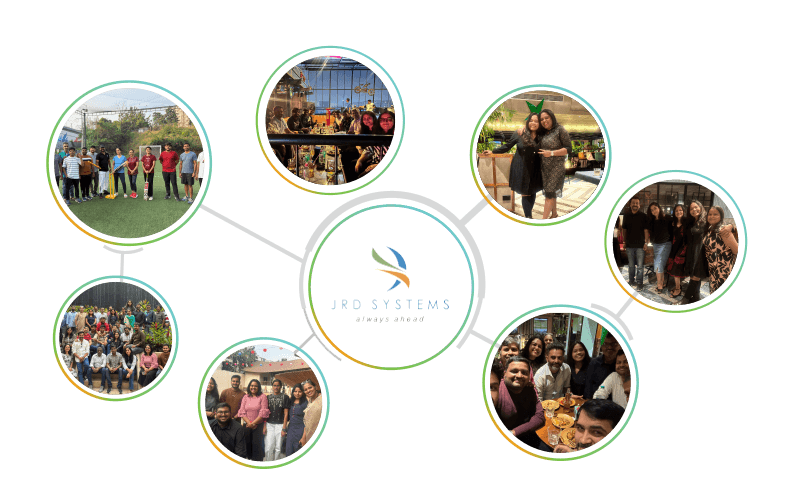
Behind the Scenes