
Intent, Confidence, Realization: What Shapes Enterprise Software Delivery
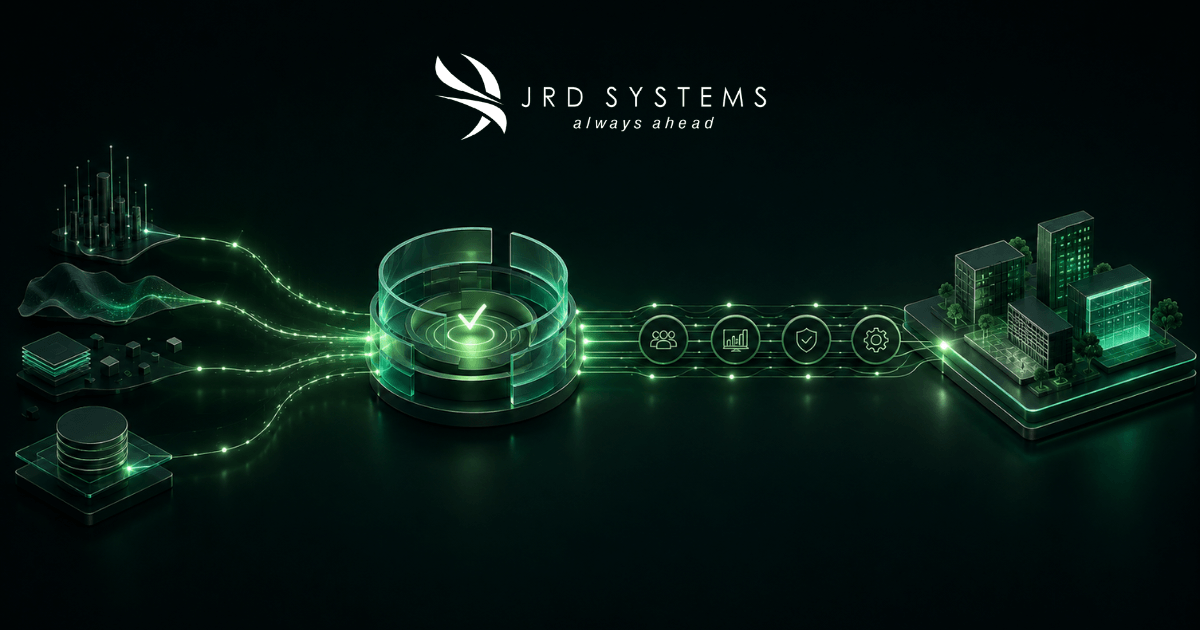
In many enterprise programs, value moves through three stages long before anyone names them: a shared understanding of what’s being built, confidence that it works under real conditions, and everyday reliance on it once it’s live.
We call these stages Intent, Confidence, and Realization. Enterprise software creates value only when Intent becomes Confidence, and Confidence becomes everyday behavior. The platform, the methodology, and the tooling all exist in service of that one transition.
The disciplines enterprise teams already invest in, architecture, governance, security, change management, aren’t a separate fourth category alongside these three stages.
They’re how each stage gets executed:
- Governance and sponsorship protect Intent
- Architecture and QA build Confidence
- Change management and support drive Realization
Intent
In our experience, programs often spend additional cycles revisiting scope. Not because requirements were missing, but because different groups believed the same requirement meant different things.
Finance reads a line item and assumes auditability. Operations read the same line and assume speed. IT reads it and assumes integration. Everyone signs the same document, and everyone signs off on a slightly different project.
The requirements workshop itself typically isn’t where alignment happens. Alignment tends to happen three or four weeks later, when finance, operations, and IT each discover independently, that they interpreted the same sentence differently. Usually while looking at a prototype or a test case that finally makes the difference visible.
This tracks with the Standish Group’s long-running CHAOS research, which has pointed to the same three success factors for decades: genuine user involvement, real executive sponsorship, and clearly stated requirements from the outset. What’s less discussed is how to actually get there.
Three questions, asked before kick-off rather than during it, tend to surface that difference early instead of downstream:
- What does success look like to finance, to operations, and to IT, written separately, before being combined into one document?
- Where do those three definitions diverge, and has anyone actually named the divergence out loud?
- When those definitions differ, whose definition of "done" governs the decision?
Programs that answer these before development starts tend to spend far less time revisiting scope later, because the disagreement surfaces in week one instead of month four.
What Intent is actually protecting changes by industry, even though the underlying pattern doesn’t. In our logistics engagements, it’s operational tempo: how fast a change can move through a live network without disrupting it. Banking programs often prioritize regulatory reporting accuracy. Healthcare programs often prioritize continuity of patient data across systems that weren’t designed to talk to each other. Different industries argue about different things in week one, but it’s the same argument in disguise: whose definition of “correct” the system is being built around.
Confidence
UAT often shows that business interpretation deserves as much attention as technical implementation. By this stage, the code may be working as designed, but UAT reveals whether what was designed actually reflects what the business intended. What UAT actually confirms is whether “what it was written to do” matches what the business meant.
A difference caught in week three belongs to one developer, for one afternoon. The same difference caught in UAT, months downstream, belongs to the whole program. Documentation has already been written around the original behavior. Other integrations have already been built assuming it. Training materials already reference it.
Building confidence continuously, sprint by sprint, means each iteration adds to a state the team has already validated, rather than letting unverified assumptions accumulate and surface together later. The discipline isn’t “test more.” It’s treating every sprint as a checkpoint on business behavior, not just on working code.
PMI’s 2025 Pulse of the Profession found that roughly four in five enterprise projects meet their business goals when validation is treated as continuous rather than saved for a final phase, a useful data point for a discipline that’s ultimately about sequencing more than volume.
Realization
Realization is where the investment case is actually captured, or left on the table.
Week One
Week one looks encouraging almost by default. Usage is high because people were asked to log in, rather than because the new way is measurably better than the old one. Usage alone isn't yet value.
Week Three
Week three is the real test. People either begin relying on the new system because it demonstrably saves effort, or they continue relying on familiar habits alongside it. That suggests the practical value of the new system has not yet become evident in everyday work.
Month Two
Month two is where support data starts telling the truth about value, not just comfort. Ticket volume typically declines as the system starts doing the job it was funded to do, or it plateaus. Which one happens says more about the return the business will actually see than anything measured during launch week.
Quarter One
Quarter one is where the investment either becomes part of everyday operations or continues depending on parallel processes that gradually limit the value the organization captures.
Realization isn’t measured by how many people logged in during launch week. It’s measured by whether, ninety days later, the value defined in the business case is actually being captured, and whether anyone still describes the system as new. Programs that stay engaged through that first quarter, refining workflows as real usage reveals what design sessions couldn’t predict and transferring support knowledge deliberately rather than through a single handover document, tend to reach captured value faster than programs that treat go-live as the end of their involvement.
We see this stage from an angle many delivery partners don’t. We have spent over two decades placing technology talent inside client teams alongside leading full engagements, so we are regularly on both sides of the Realization handoff: the team that built the system, and the team supplying the people who inherit it day to day. The distance between those two vantage points is usually where Quarter 1 either goes well or drags.
At a Glance
| Stage | What it protects | Familiar practices that serve it |
| Intent | Shared meaning across stakeholders | Requirements workshops, sponsorship, governance |
| Confidence | Validated business behavior before scale | Continuous testing, QA automation, architecture review |
| Realization | Value captured through daily use | Change management, support transition, usage refinement |
How This Shapes Our Work at JRD Systems
Requirements sessions bring finance, operations, IT, and leadership into the same conversation from day one, so Intent is tested in week one rather than assumed. Our AI-Enabled QA Framework keeps Confidence building continuously through every sprint, rather than concentrated in a final testing phase. We remain involved through Realization, helping teams translate a successful go-live into measurable value during the first full quarter of production use.
This shows up directly in our own delivery work. For a logistics client, we built a Material Management System on Appian, synchronized in real time with SAP. That required upfront alignment between operations and IT to get Intent right, and continuous validation against live inventory data to build Confidence before scale.
Where to Start
Technology delivers its greatest value when Intent becomes Confidence, and Confidence becomes Realization. Most programs already have strong instincts about at least one of these three stages. Few manage all three with the same discipline.
If you are weighing where your own program stands, we would welcome a conversation about which stage is worth strengthening first. Reach us at contact@jrdsi.com or (586) 416-1500.