
AI Growth vs Governance: The Emerging Enterprise Gap
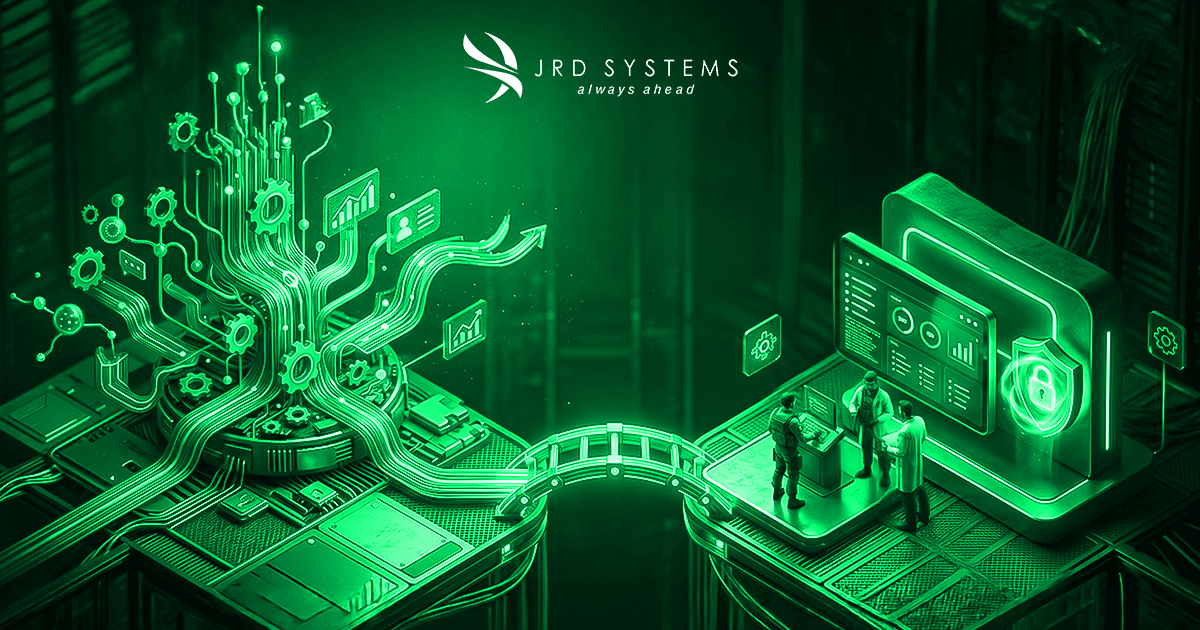
A global organization recently reviewed their AI landscape and found over 120 active AI-driven workflows running across operations, analytics, and customer systems.
When asked a simple question: “Which of these directly impact business outcomes, and how are they governed?”
There was no clear answer.
Not because the systems were not working. But the reason is that they were working everywhere, all at once, without a unified view of control, security, or ownership.
This is where organizations face challenges today.
AI Is Expanding Faster Than How It Is Managed
AI is now deeply embedded in how organizations operate. This is not limited to dashboards or isolated tools. But it is actively driving workflows, decisions, and interaction throughout functions.
With advancements in Google Cloud, AI systems are becoming more connected and capable of operating across multiple business processes.
These systems can:
- Initiate actions based on real-time data
- Coordinate across departments without manual intervention
- Continuously update forecasts, operations, and reporting
This creates a more responsive and efficient environment. At the same time, it increases the requirement for structured control.
What Is Actually Creating the Complexity
The challenge is not adopting AI, but it is how AI systems interact with each other and with organizational data.
As organizations scale AI, they typically see:
- Multiple workflows running simultaneously across different teams
- Data being accessed and processed across systems
- Automated decisions being generated without clear visibility
- Overlapping use cases that operate independently
This leads to a situation where systems are active, but end-to-end clarity is limited.
Security by Design
As AI systems expand, security becomes central to how they are designed and managed.
Organizations must ensure that:
- Data access is controlled and traceable
- AI systems operate within defined policies
- Interactions between systems are secure
- Activities are continuously monitored
Capabilities within Google Cloud support this through secure data integration, access management, and monitoring frameworks.
However, these capabilities deliver value only when they are applied as part of a structured infrastructure.
The Gap Between Adoption and Control
Most organizations have strong AI capabilities. What they often lack is a connected approach which brings together: AI systems, Data environments, Security controls and Business workflows.
Without this alignment, visibility becomes dispersed, governance becomes inconsistent and ownership becomes unclear.
This is where operational complexity increases.
What Actually Works
Organizations that are able to scale AI effectively focus on a few key guidelines:
- Systems are designed around business workflows, not isolated use cases
- Data access and movement are clearly defined and monitored
- Security controls are applied consistently across all systems
- Automated decisions have clear ownership and traceability
This creates an environment where AI can scale without losing control.
JRD Systems’ Approach
At JRD Systems, our focus is on partnering with organizations and bringing structure in how AI operates across the enterprise.
We assist organizations to:
- Connect AI systems directly to business workflows so every deployment has a defined role
- Build visibility across data, decisions, and system interactions
- Implement security as a foundational layer across all AI and data environments
- Establish clear ownership and governance across automated processes
This approach ensures that AI systems are not only active, but also controlled, secure, and aligned with business priorities.
As AI continues to expand across organizations, the ability to manage it with clarity and control becomes critical to sustained success.